
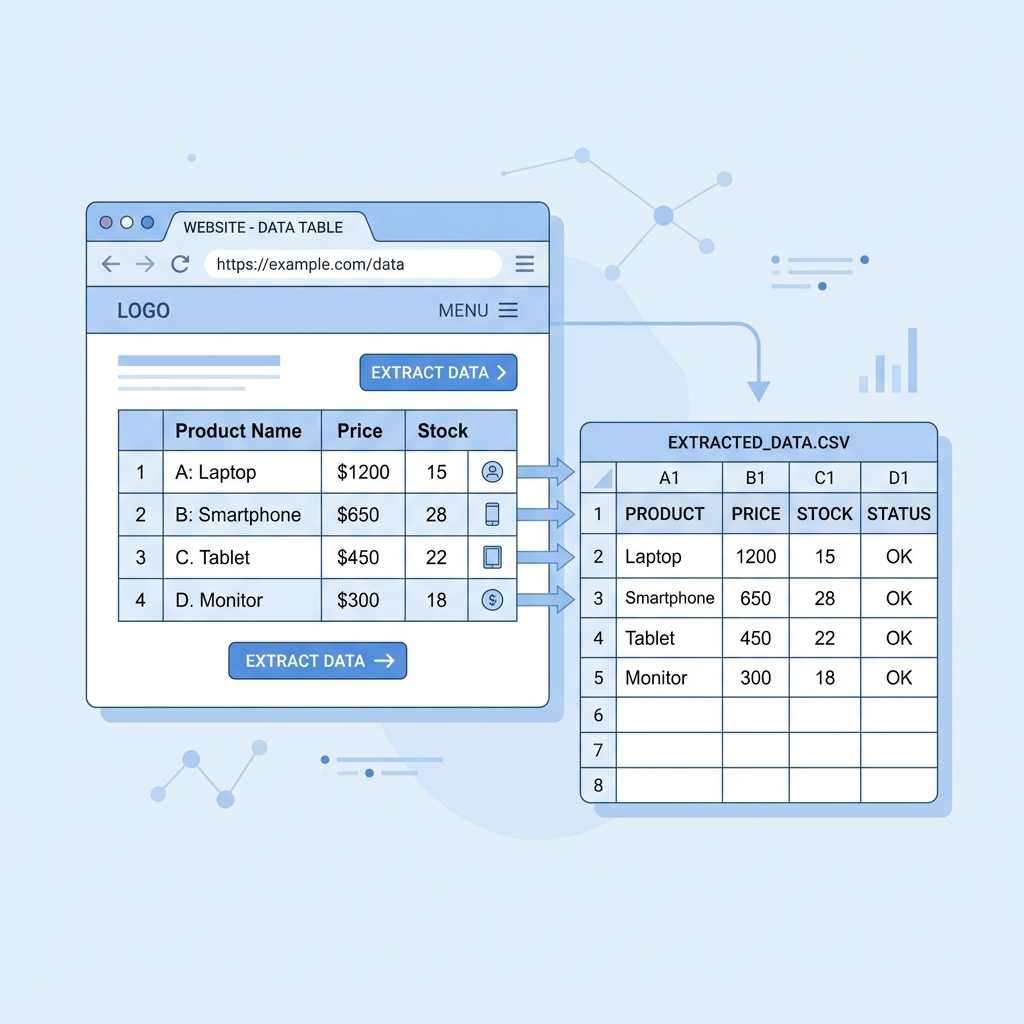
Web Scraping Best Practices: The Developer's Playbook
Table of Contents
1. Introduction
Web scraping has evolved from simple scripts that fetch raw HTML to a sophisticated engineering discipline. In 2026, companies rely on web scraping for market intelligence, pricing comparison, AI model training, and brand protection.
However, as websites deploy advanced anti-bot firewalls like Cloudflare Turnstile, Imperva, and Akamai, simple web crawlers are easily blocked. To learn the strategies to deal with these, read our guide on how to bypass IP blocks. To build robust, reliable scrapers, developers must implement industry-standard best practices.
2. Respectful Scraping (Robots.txt & Crawl-Delay)
A good web scraper should minimize its impact on target servers. Respect the rules defined in the site's robots.txt file whenever possible. Check for:
- Disallowed Paths: Avoid folders containing administrative files or search result query loops.
- Crawl-Delay Directive: Follow the specified delay between sequential requests.
- Peak Hours: Run large scraping tasks during the website's off-peak hours (typically late at night) to prevent slowdowns for real users.
3. Advanced Proxy Management
Using a single IP address for scraping will quickly lead to blocks. To avoid this, implement a proxy management strategy:
We highly recommend you rotate your exit IP addresses using a backconnect proxy gateway. For simple sites, static datacenter proxies or a free public proxy list may suffice for testing. However, for sites with strict bot detection, you should use rotating residential or mobile proxies (like Turbo Proxy's pool of over 7 million IPs).
4. Headless Browsers vs. Raw HTTP requests
Before writing your scraper, choose the right execution mode. Using raw HTTP clients is faster and consumes fewer resources, while headless browsers are better for sites with dynamic JavaScript content.
| Criteria | Raw HTTP Requests (Requests, Axios) | Headless Browsers (Puppeteer, Playwright) |
|---|---|---|
| Execution Speed | Extremely Fast (<100ms) | Slow (1-5 seconds per page) |
| Resource Usage | Low (Minimal CPU & memory) | High (Spawns full browser instances) |
| JS Rendering | No (Parses raw HTML only) | Yes (Executes client-side scripts) |
| Anti-Bot Evasion | Low (Fails on JS challenges) | High (Mimics real user environments) |
5. Comparison Table: Scraper Framework Suitability
Choose the right library for your scraping stack based on these recommendations:
| Library/Framework | Best Suited For | Strengths |
|---|---|---|
| BeautifulSoup (Python) | Beginners, parsing static local HTML. | Simple API, easy to learn, quick setup. |
| Scrapy (Python) | Large-scale scraping pipelines, async crawls. | Built-in item pipelines, concurrency, middleware. |
| Playwright (JS/Python) | Dynamic SPA websites, interactive form testing. | Excellent selector engine, auto-waits, multi-browser. |
| Puppeteer (JS) | Chrome rendering tasks, screenshot generation. | Direct Chrome DevTools connection, stealth plugin support. |
6. Evasion of Browser Fingerprinting
Modern firewalls use browser fingerprinting to identify automated scripts. They analyze parameters like:
- Canvas Fingerprinting: Rendering hidden shapes to identify GPU and driver configurations.
- AudioContext: Analyzing your audio engine behavior.
- Navigator Object: Checking variables like
navigator.webdriver, which headless browsers set to true by default.
Use tools like **puppeteer-extra-plugin-stealth** or **playwright-stealth** to clean or mask these variables and avoid detection.
7. Structuring Data Extraction Pipelines
Keep your scraping code modular by separating the **network retrieval layer** from the **HTML parsing layer**.
If the website changes its layout, your parsing code will break, but your connection engine will remain intact. Save the raw HTML to local storage or a database first, and then parse the data using offline scripts to prevent loss.
Frequently Asked Questions
Should I respect robots.txt rules?
Yes, respecting robots.txt is a key web scraping best practice that ensures your crawler stays compliant and does not overload target servers.
How can I emulate real human browsing patterns?
Add randomized delays (jitter) between requests, move your cursor naturally using browser automation tools, and execute natural navigation flows starting from the homepage.
What is browser fingerprinting?
Browser fingerprinting is a tracking method that reads canvas, GPU, audio, and JS environment variables to verify if a browser is automated, even if you are using high-quality proxies.
8. Conclusion
Successful web scraping requires respectful crawling, proxy rotation, and proper header management. Implementing these best practices will help you build reliable data collection engines.
Looking for reliable residential proxies to power your scraping stack? Turbo Proxy provides over 7 million residential, mobile, and datacenter IPs with 99.9% uptime. Sign up today and scale your web operations.