
Why 99% of Web Scrapers Fail: The Secret to Backconnect Proxies
The Brutal Reality of Modern Web Scraping
You write the perfect scraper, test it locally on a few pages, and everything runs smoothly. But the moment you scale it up to pull thousands of product details, real estate listings, or lead details, your script crashes. You are met with a wall of 403 Forbidden status codes, Cloudflare CAPTCHAs, and instant IP bans.
Why does this happen? The answer is simple: websites have evolved. Standard proxy lists—where you manually swap static IP addresses in your code—no longer cut it. Modern web applications track access velocity, fingerprint parameters, and subnets. To bypass these barriers, you need to implement backconnect proxies.
What are Backconnect Proxies?
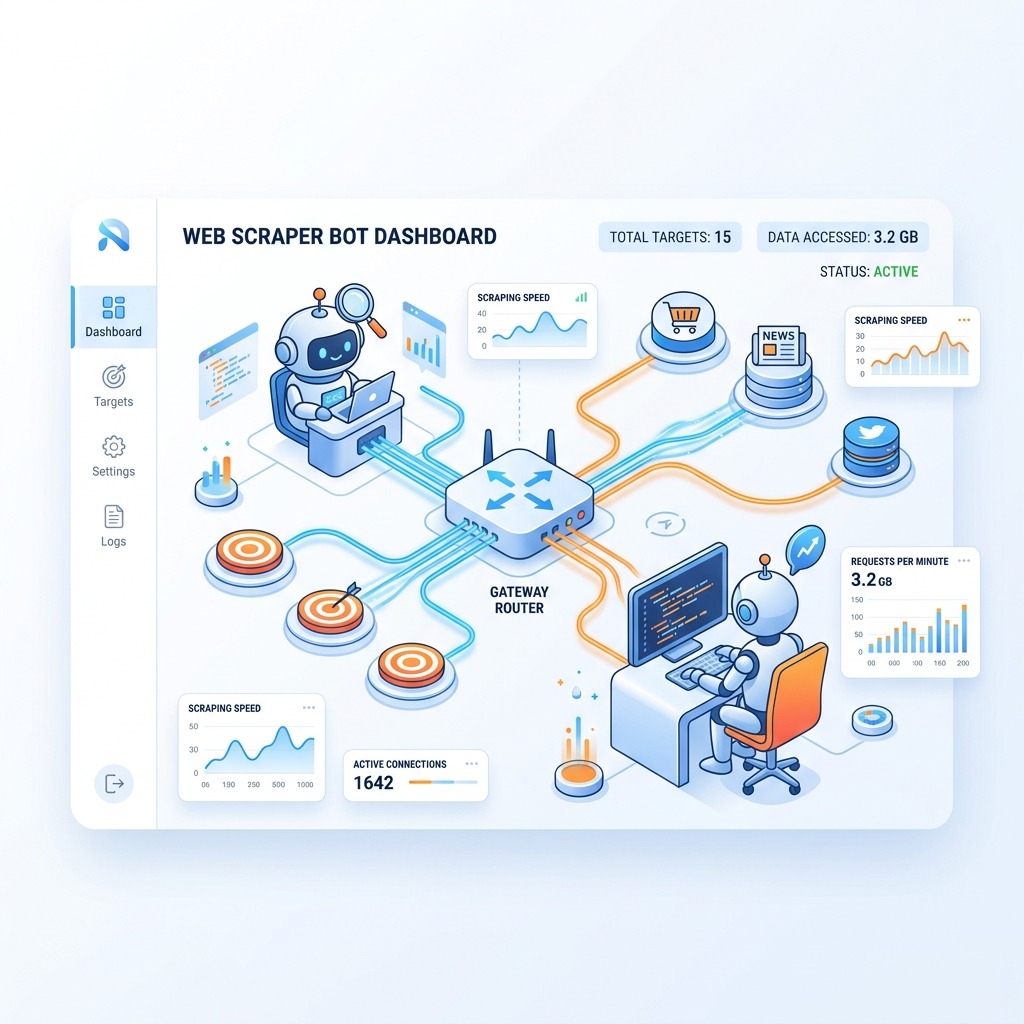
A backconnect proxy is a proxy server architecture that acts as a single gateway node for your scraping clients. Instead of connecting directly to thousands of separate proxy IPs, your scraper makes every request through a single "entry point" (a hostname and port).
Behind the scenes, the backconnect server automatically routes your request through a massive pool of millions of rotating IP addresses. Each time your bot sends a request, the entry server assigns a fresh, clean IP from its pool.
How Backconnect Proxies Work:
- Your bot sends a request to the backconnect gateway:
gate.turboproxy.com:1221. - The gateway interceptor checks your credentials and queries the active IP pool.
- It assigns a high-quality residential or datacenter IP to route the request.
- The target website sees a completely normal, unique user visiting their page.
- For your next request, the gateway automatically swaps the IP address, preventing pattern detection.
Why Backconnect Proxies Outperform Standard Proxies
If you are still managing a static proxy list, you are wasting valuable engineering time. Here is why backconnect proxies are the industry standard for enterprise scraping:
- Zero Rotation Coding: You don't have to write complex IP rotation algorithms in Python, Node, or Go. The proxy gateway does all the heavy lifting automatically.
- Access to Millions of IPs: Instead of being limited to 50 or 100 static IPs that you purchased, backconnect gateways give you access to a pool of over 7 million residential IPs.
- Bypassing Rate Limits: Because every page request uses a completely different IP address, your bot never triggers the destination website's rate limit thresholds.
- Improved Success Rates: Dynamic proxy rotation ensures that even if one IP gets flagged, the very next request will automatically route through a working, clean IP.
Ready to Scale Your Scraping Success?
Stop managing complex proxy files and code loops. Turbo Proxy offers high-performance backconnect proxies with automatic rotation, SOCKS5 support, and a pool of 7M+ clean residential IPs.